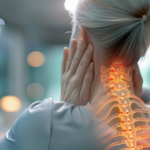

When most people think about core strength, they think about visible abdominal muscles – the kind that feature in fitness advertising. But the core muscles that matter most for spinal health are the ones you never see: the deep stabilising layers that operate below the surface, quietly managing the forces that pass through the spine with every movement you make.
The relationship between these deep core muscles and long-term spinal health is one of the most important and most underappreciated aspects of back care. Understanding it changes how you think about back pain prevention, rehabilitation, and the exercises that are actually worth doing.
The Deep Core: What It Is and What It Does
The spinal stabilising system operates across three layers. The outer layer consists of the large, visible muscles – the rectus abdominis, the external obliques, the erector spinae – that generate movement and provide gross stability. These are the muscles that most exercise programmes target.
The middle and deep layers are less familiar but more critical for spinal protection. The multifidus, running along the length of the spine, provides segmental stability at each individual vertebral level. The transverse abdominis, wrapping around the torso like a corset, increases intra-abdominal pressure when activated, stiffening the lumbar spine against compressive and shear forces. The pelvic floor and diaphragm complete the pressure canister that these muscles form – a system that activates automatically ahead of limb movement to protect the spine before the load arrives.
When this deep stabilising system functions correctly, the spine moves through its range without any single segment being subjected to excessive force. When it is weak or poorly coordinated, that protection is compromised.
How Core Weakness Contributes to Spinal Pain and Injury
Research in spinal biomechanics has consistently demonstrated that people with chronic low back pain show altered activation patterns in their deep core muscles, particularly the multifidus and transverse abdominis. These muscles fail to activate at the right time – or with sufficient force – leaving individual spinal segments vulnerable during movement.
The consequences accumulate over time. Without adequate stabilisation, the passive structures of the spine – the discs, the facet joint capsules, the spinal ligaments – absorb more of the load that the muscles should be sharing. Discs degenerate faster. Facet joints develop arthritic changes sooner. The probability of a disc herniation in response to an otherwise ordinary movement – a cough, a slight twist while lifting – increases significantly.
Importantly, this weakness is rarely painful in itself. People with significantly weakened deep core muscles often feel no immediate discomfort until something goes wrong – which is precisely what makes progressive core rehabilitation essential rather than optional in spinal care.
The Difference Between Superficial and Deep Core Training
Standard gym exercises – sit-ups, crunches, planks – predominantly train the superficial layer. These exercises have value for overall fitness but are not specific to the deep stabilising function that protects the spine.
Deep core training looks different. It begins with low-load, high-precision activation of the multifidus and transverse abdominis – learning to contract these muscles independently and in coordination without recruiting the superficial layer. This is fundamentally a neuromuscular skill before it is a strength exercise.
From this foundation, functional progression adds gradually increasing loads, movement complexity, and eventually sport-specific or work-specific demands. The progression must respect the recovering spine’s tolerance – too aggressive too soon reliably produces setbacks, while too conservative produces insufficient stimulus for genuine adaptation.
Why Rehabilitation Must Accompany Spinal Treatment
One of the most common reasons back pain recurs after treatment is that the treatment addressed the immediate structural problem – a herniated disc, a compressed nerve – without rebuilding the muscular support system that protects the spine from future injury.
Non-surgical spinal decompression can decompress an irritated nerve root and support disc recovery. But unless the deep core muscles that should be preventing re-injury are systematically rehabilitated, the mechanical environment that produced the original problem remains unchanged. The disc that recovered through decompression remains vulnerable.
At ANSSI Wellness, core rehabilitation is integrated into every Back Pain Treatment programme as a non-negotiable component. The decompression work and the rehabilitation work are designed to complement each other – one addressing the immediate structural problem, the other building the protection that prevents it from recurring.
Practical Starting Points for Deep Core Activation
The foundation of deep core rehabilitation begins with learning to activate the right muscles correctly rather than forcefully. Gentle abdominal hollowing – drawing the lower abdomen inward without breath-holding or bracing the outer abdominals – is the basic entry point for transverse abdominis activation. This should initially be practised in positions that reduce spinal load: lying on the back with knees bent, or in four-point kneeling.
For the multifidus, gentle co-contraction exercises that ask the muscle to resist small perturbations while maintaining a neutral spinal position develop the segmental stability function that matters most for disc and joint protection.
These foundational exercises are less dramatic than the movements featured in fitness videos. They are also the exercises that consistently make the most meaningful difference to long-term spinal health when performed correctly and progressed appropriately.
Conclusion
The muscles you can’t see in the mirror are the ones doing the most important work for your spinal health. Building and maintaining the deep core system is not a fitness goal – it is a long-term health strategy that protects the spine’s structural integrity across decades of movement and loading. For anyone who has experienced back pain, it is also the most reliable strategy for preventing its return.